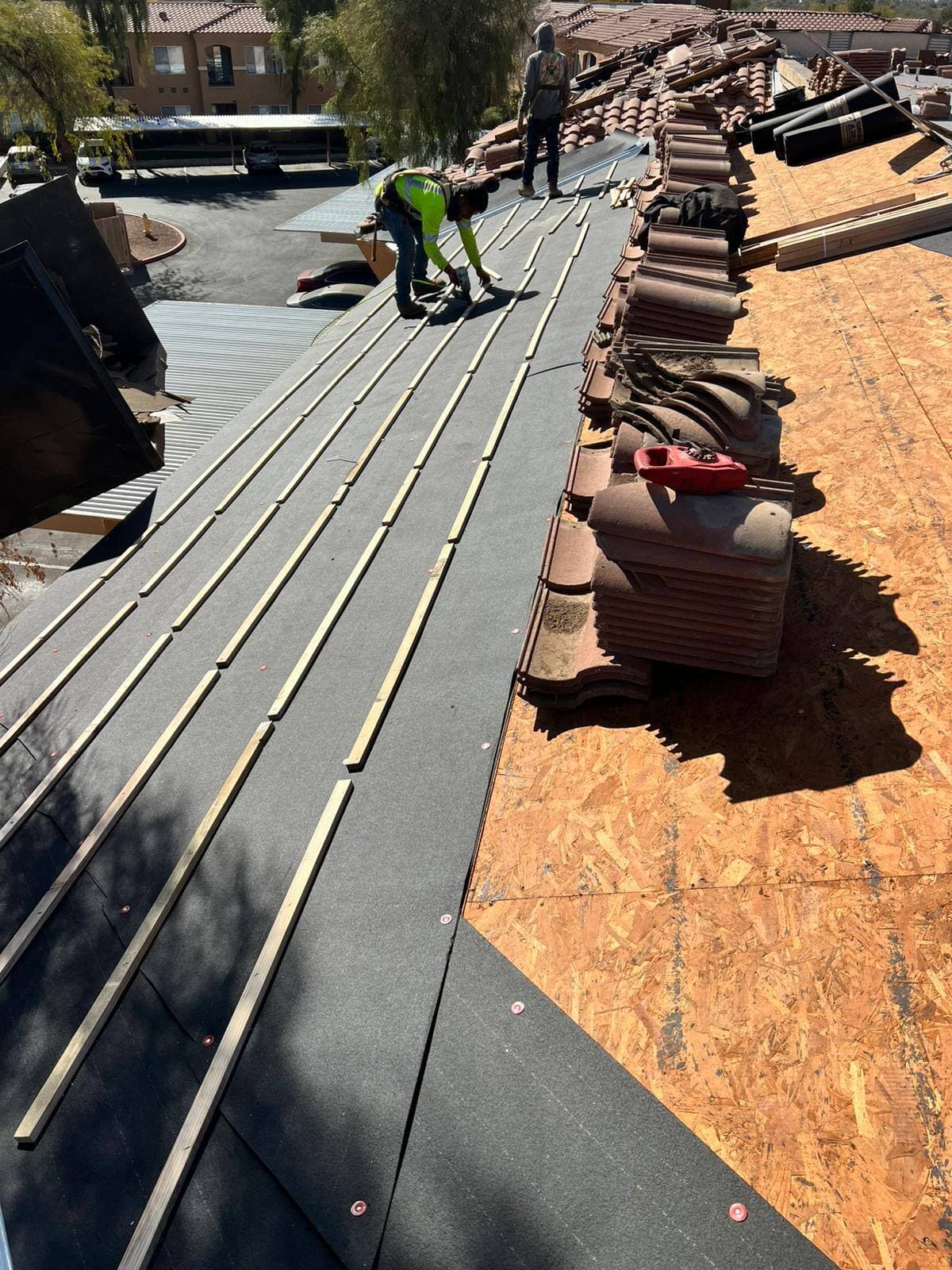
Storm & monsoon damage
After a microburst, the priority is the roof closed before the next storm.
Monsoon storms do not fail roofs gently. When tile is off the slope or a section has lifted, the priority is getting the roof closed before the next cell moves through.
Who this is for
Anyone with fresh storm damage — displaced tile, lifted panels, a peeled shingle section, a downed tree limb, or active water coming in.
The detail
What this work actually involves.
Arizona's monsoon does not deliver the steady rain other climates get. It delivers microbursts: an outflow wall that hits at fifty or sixty miles an hour with almost no warning, dumps an inch of rain in twenty minutes, and drives it sideways under tile and up under shingle edges. Then it is clear and 105 degrees again by dinner. A roof can be fine in June and open in July.
Wind damage on a tile roof usually shows up as tile shifted out of course along a rake or a ridge, or tile broken by something that flew into it — a section of a neighbour's roof, a palm frond, patio furniture. On shingle it shows as a lifted or peeled field where the sealant strip let go. On low-slope and foam it shows up as debris punctures and lifted edge metal. On any of them, the underlayment is now exposed to the next storm.
Our first job in that situation is stabilization: get the exposed area covered, get the water out of the path it has found, and stop the damage from compounding. Documentation comes with it — photographs of what failed and where, which is what you need whether you are filing a claim or just deciding what to do next. Then we talk about the permanent repair.
What's included
Storm & Monsoon Damage, line by line.
- Stabilization of the exposed area to stop further water entry
- Full post-storm roof walk, including areas that look untouched
- Photo documentation of every damaged area, dated
- Displaced and broken tile re-set or replaced
- Lifted or peeled shingle sections repaired back to sound material
- Panel, edge metal and fascia damage on metal roofs
- Debris and impact-puncture repair on low-slope and foam
- Ridge and hip mortar re-set where wind has opened it
- Gutter, scupper and drain clearing after debris loading
Our work
Storm & Monsoon Damage on real roofs.
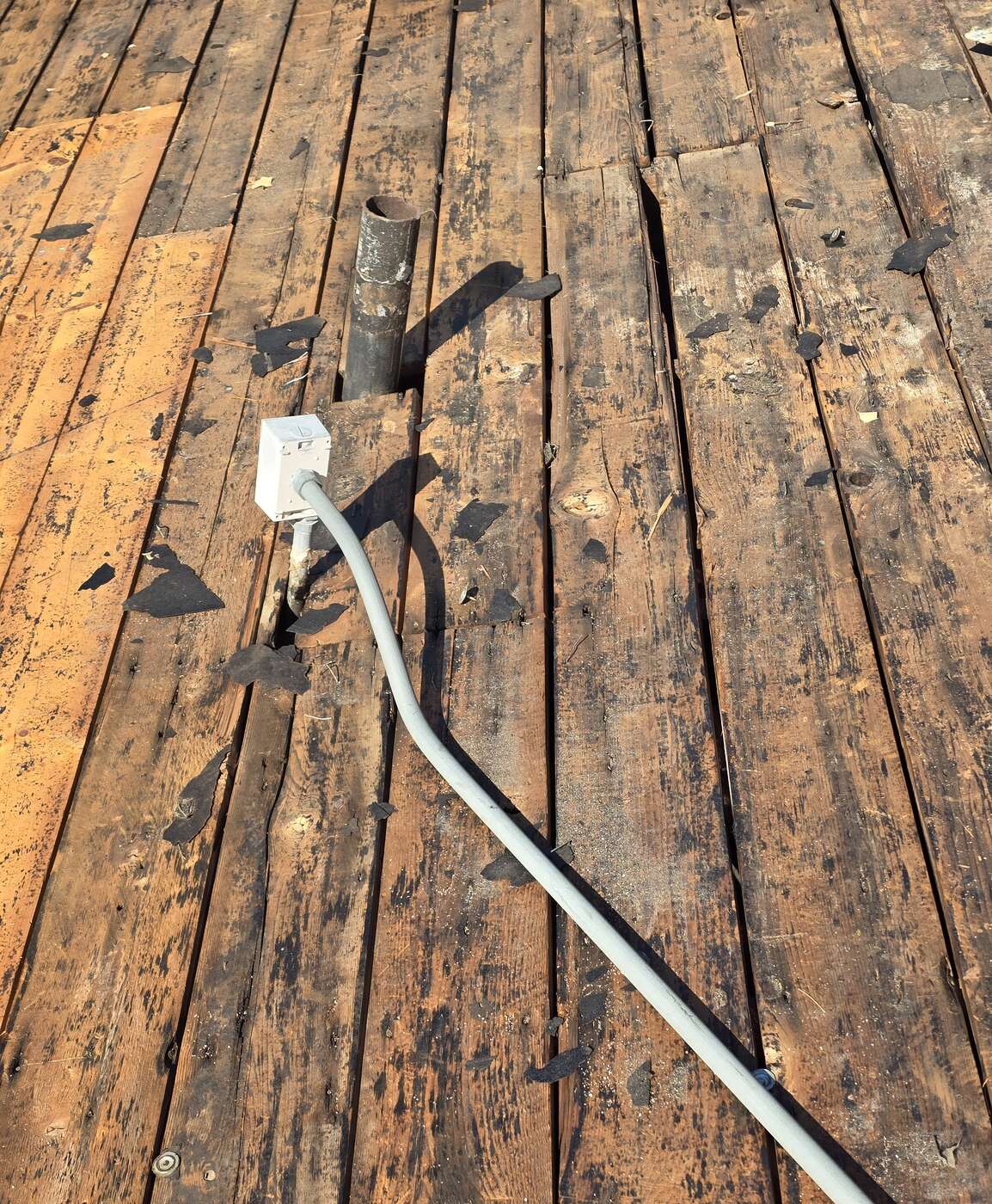
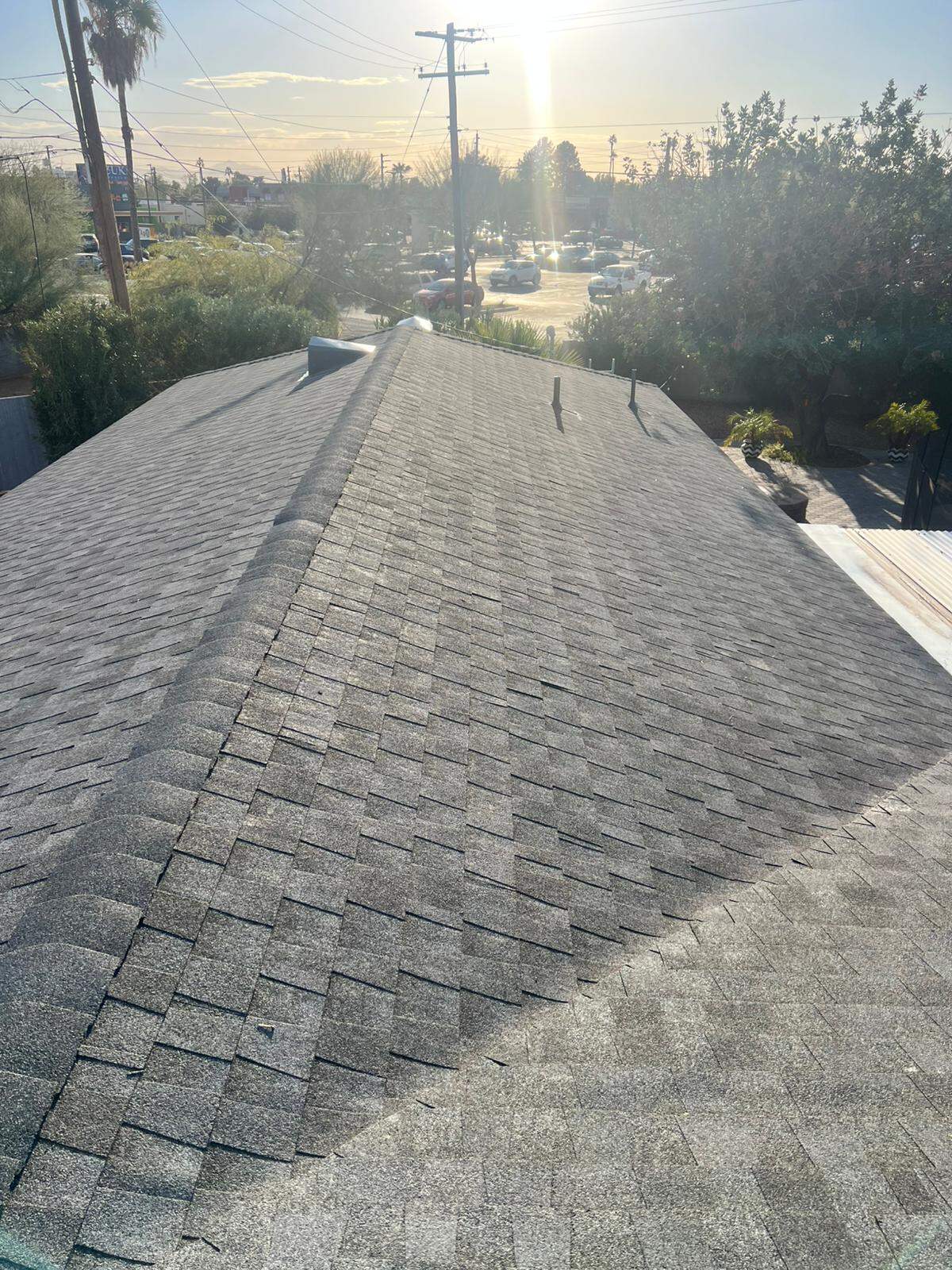
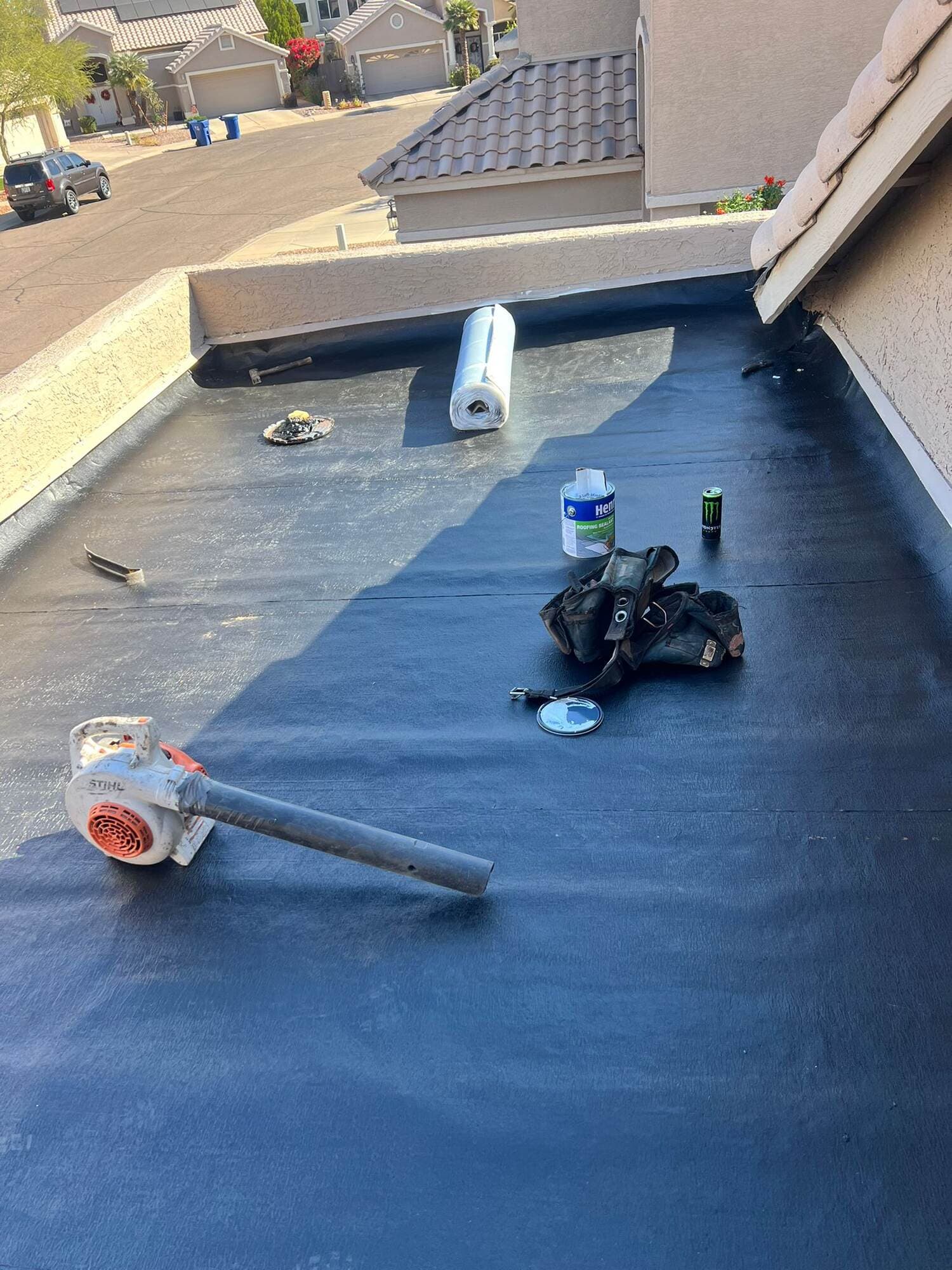
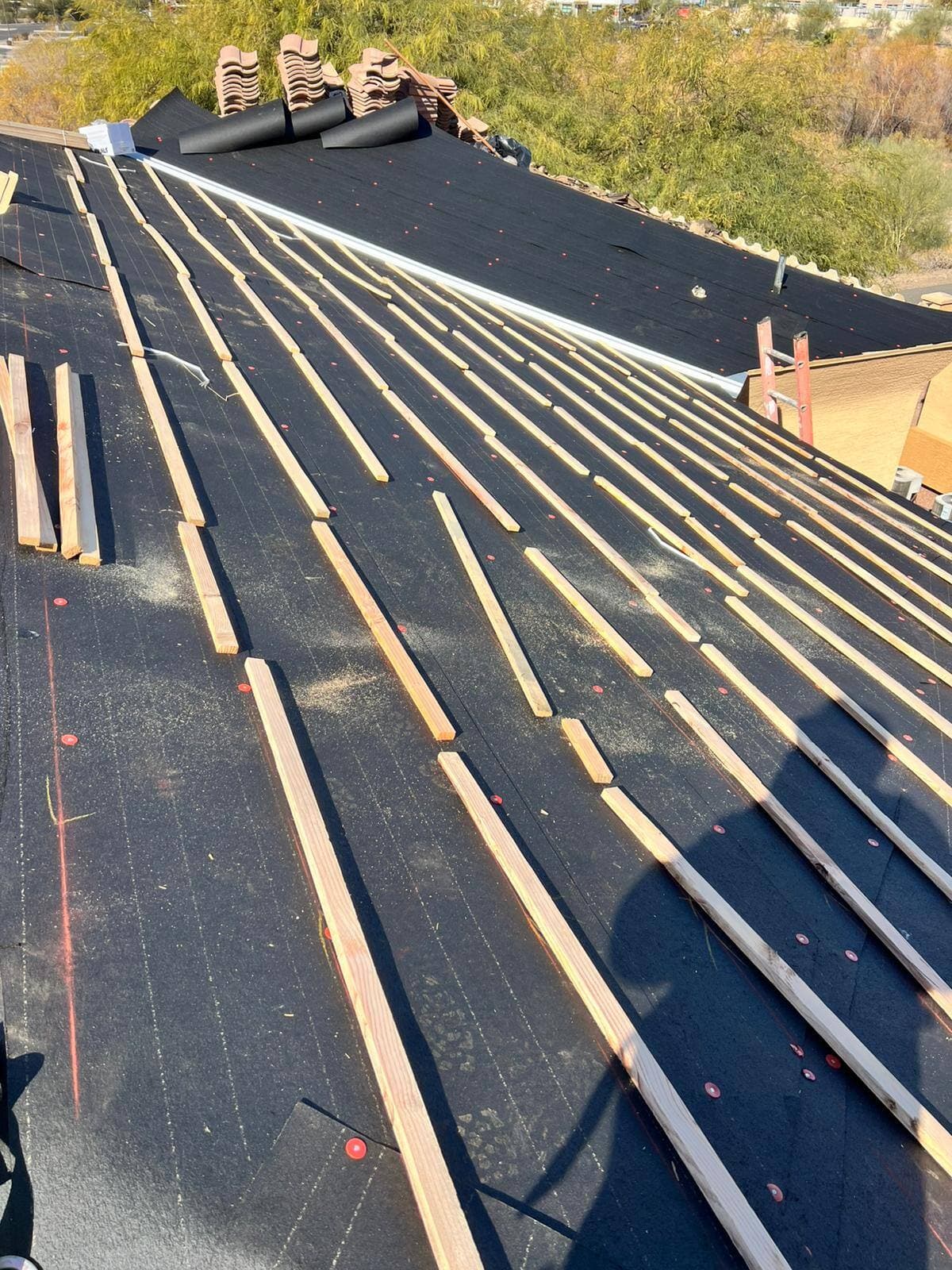
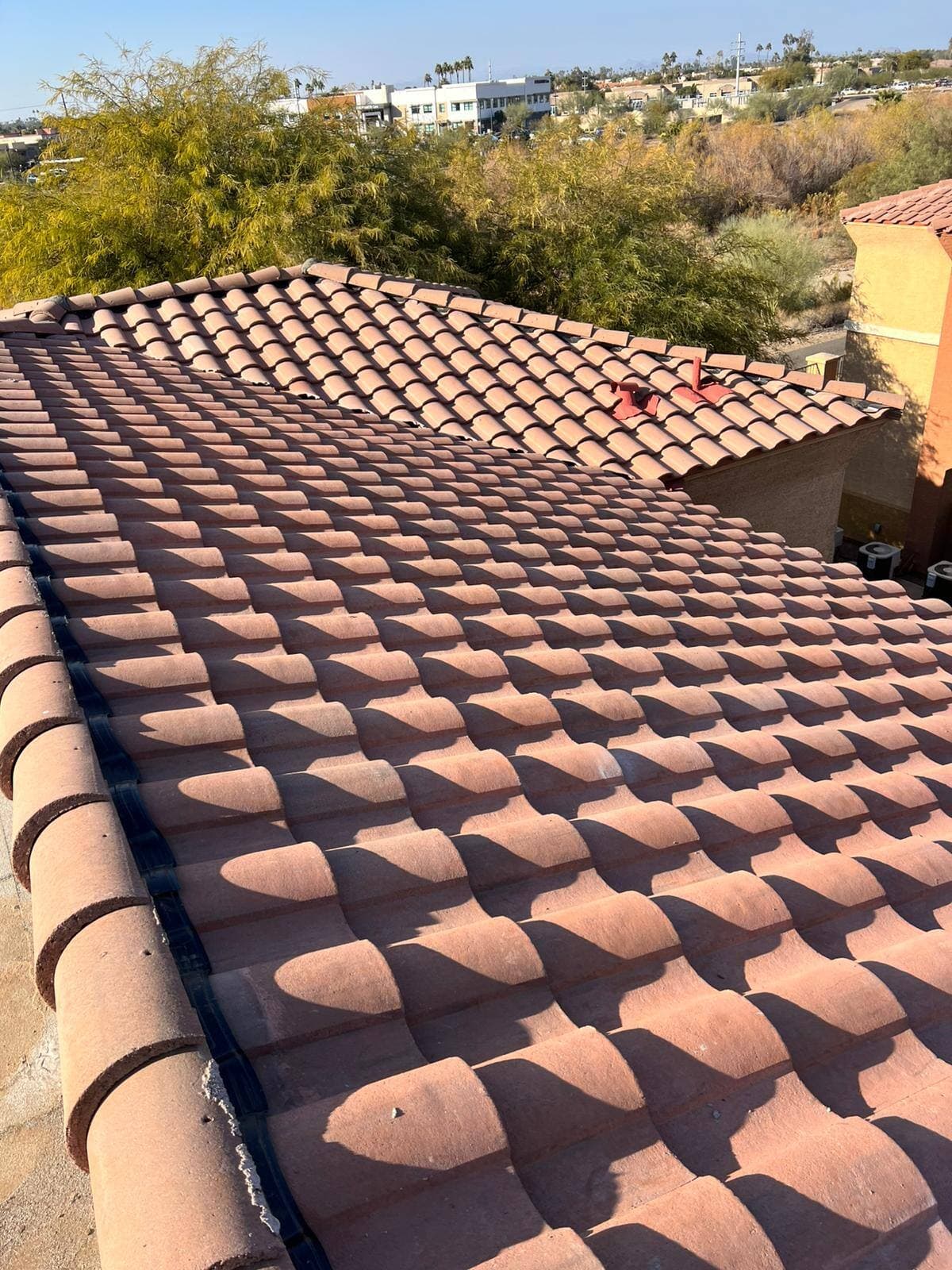
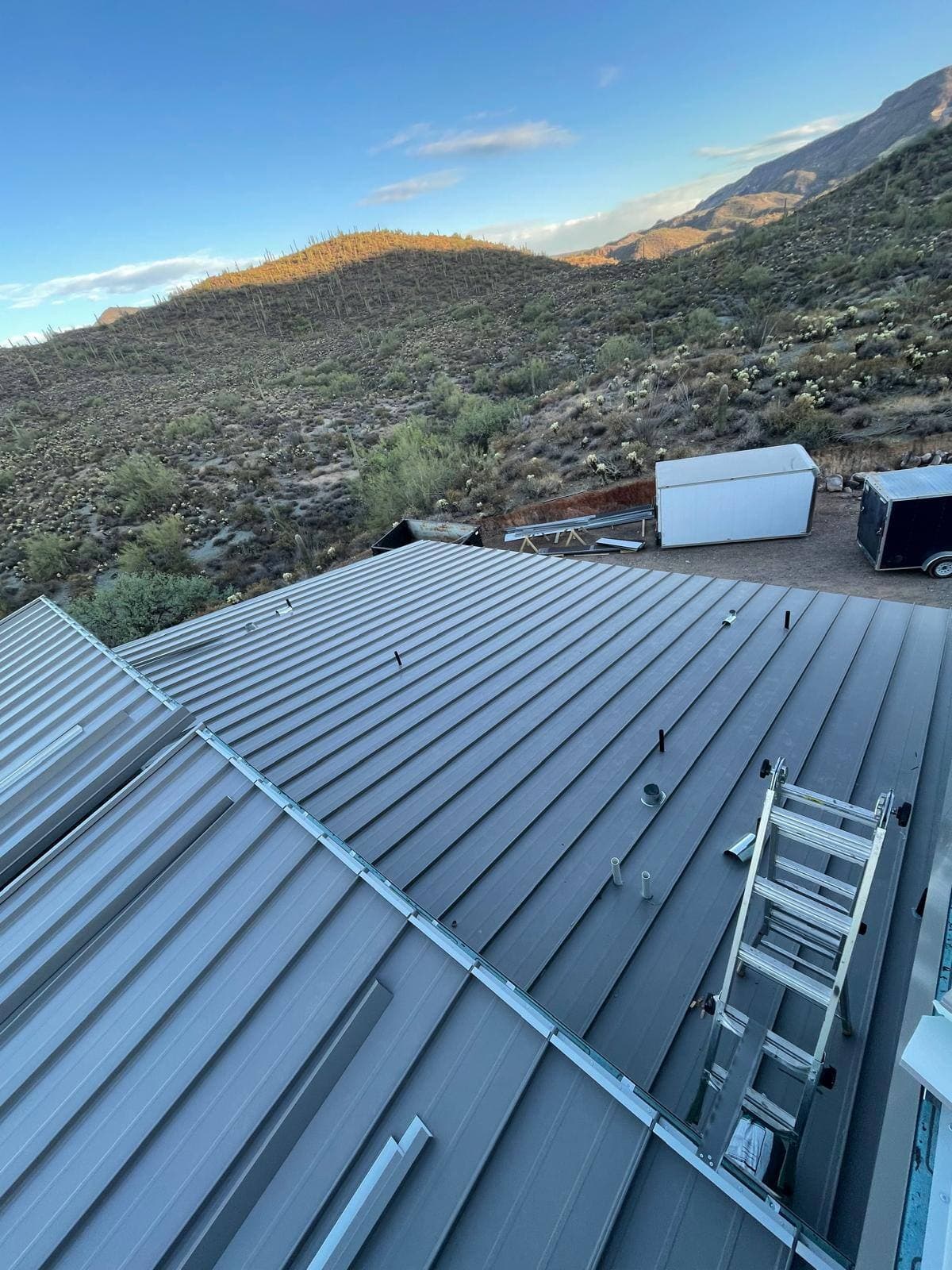
Every photo below is a job we did. Nothing on this site is stock.
Questions about this work
Storm & Monsoon Damage — straight answers.
A storm just went through and I have water coming in. What do I do first?
Move what is under it, put a container down, and call us.
My roof looks fine from the ground. Should I still have it looked at after a big storm?
Yes. Displaced tile a course or two up, a lifted shingle edge, or a torn boot are all invisible from the driveway and all let water in. A post-storm walk is cheap compared with finding out in October.
Do you help with insurance claims?
We document the damage thoroughly with dated photographs and a written description of what failed, which is what an adjuster needs. What your policy covers is between you and your carrier — we will not make promises about a claim we cannot see.
Should I use a crew that knocks on my door after a storm?
Be careful. Storm-chasing outfits work the Valley hard after every big monsoon cell. Before anyone touches your roof, check that they are local, that you could find them again in six months, and never pay in full up front.
Free estimate
Get someone on the roof who will show you the photos.
Call or text (602) 794-5224, or send photos over WhatsApp. We walk the roof, photograph what we find, and put a written estimate in front of you — including when the honest answer is that you do not need us yet.
G&L Roofing Services LLC · Phoenix, AZ